Raw to cooked weight
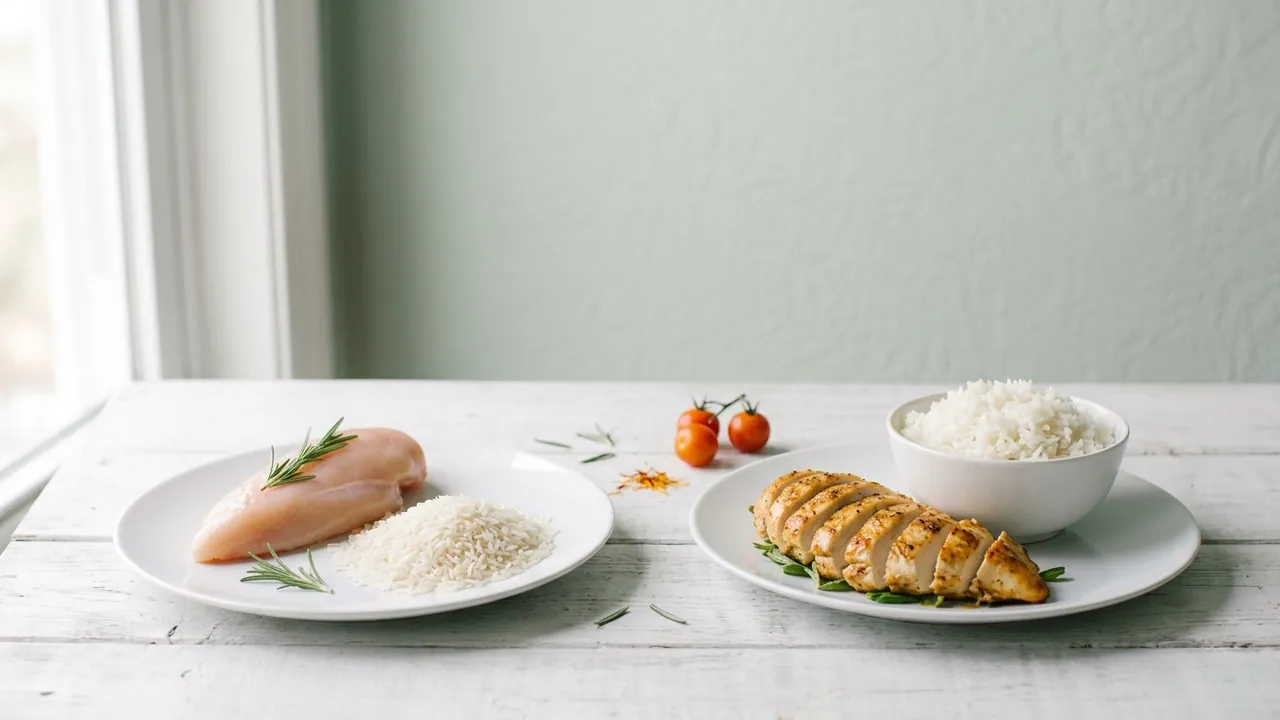
Meat loses water and rice absorbs it. Convert in either direction for accurate portions.
How to use this tool
- Choose the direction: raw weight or cooked weight.
- Pick the food from the list.
- Enter the weight in grams.
- Read the converted weight and the percent change.
Raw to cooked weight
Meat loses water, rice and pasta absorb it. Convert between raw and cooked weight so your portions and meal prep stay accurate.
How the conversion works
Each food has a typical yield factor: cooked weight divided by raw weight. For example chicken breast is about 0.75, so 200 g raw becomes about 150 g cooked, while white rice is about 3, so 100 g dry becomes about 300 g cooked. The tool multiplies or divides by that factor. Real results vary with cut, fat, method and doneness.
Raw to cooked weight chart
Typical yield factors used by the calculator. Multiply the raw weight by the factor to get the cooked weight, or divide a cooked weight by it to get back to raw.
| Food | Factor | 100 g raw becomes | Change |
|---|---|---|---|
| Chicken breast | 0.75 | 75 g | loses 25% |
| Ground beef | 0.72 | 72 g | loses 28% |
| Steak (medium) | 0.75 | 75 g | loses 25% |
| Pork chop | 0.72 | 72 g | loses 28% |
| Salmon fillet | 0.8 | 80 g | loses 20% |
| White rice | 3 | 300 g | gains 200% |
| Pasta (dry) | 2.2 | 220 g | gains 120% |
| Lentils (dry) | 2.4 | 240 g | gains 140% |
| Oats (dry) | 2.5 | 250 g | gains 150% |
| Potato (baked) | 0.8 | 80 g | loses 20% |
| Mushrooms | 0.5 | 50 g | loses 50% |
Oats depend almost entirely on how much water or milk you add, so treat that row as a rough guide.
Tips for tracking calories and macros
- Weigh raw when you can. Raw weights do not change with cooking time, so they give the most consistent numbers.
- Match the label in your app. Food databases list both raw and cooked entries. Logging a cooked weight against a raw entry can be off by 25% or more.
- Batch cooking: weigh all the raw food, cook it, then weigh the whole cooked batch. Divide your cooked portion by the cooked total to know what share of the raw weight you ate.
- Rice and pasta vary most. Longer cooking and more water make them heavier, so use your own factor if you cook them the same way every time.
Related guides
 How to Convert a Recipe from Cups to Grams, Step by Step
Frequently asked questions
Why does meat weigh less after cooking?
It loses water and some fat, usually 20 to 30% of its weight.
Why does rice weigh more after cooking?
It absorbs water, so cooked rice weighs about three times the raw weight.
Should I weigh food raw or cooked?
Pick one and stay consistent. Raw weights are usually more precise, because cooked weights change with water.
How much does 100 g of dry pasta weigh when cooked?
About 220 g. Most dry pasta gains 2 to 2.5 times its weight when boiled, depending on shape and cooking time.
How much cooked chicken do I get from 1 lb raw?
About 12 oz (340 g). Chicken breast usually keeps about 75% of its raw weight after cooking.
How much does 1 cup of dry rice make?
One cup of uncooked white rice weighs about 185 g and makes about 3 cups (roughly 550 g) of cooked rice.