Why a Cup of Flour Weighs Different Amounts (and How to Measure It Right)
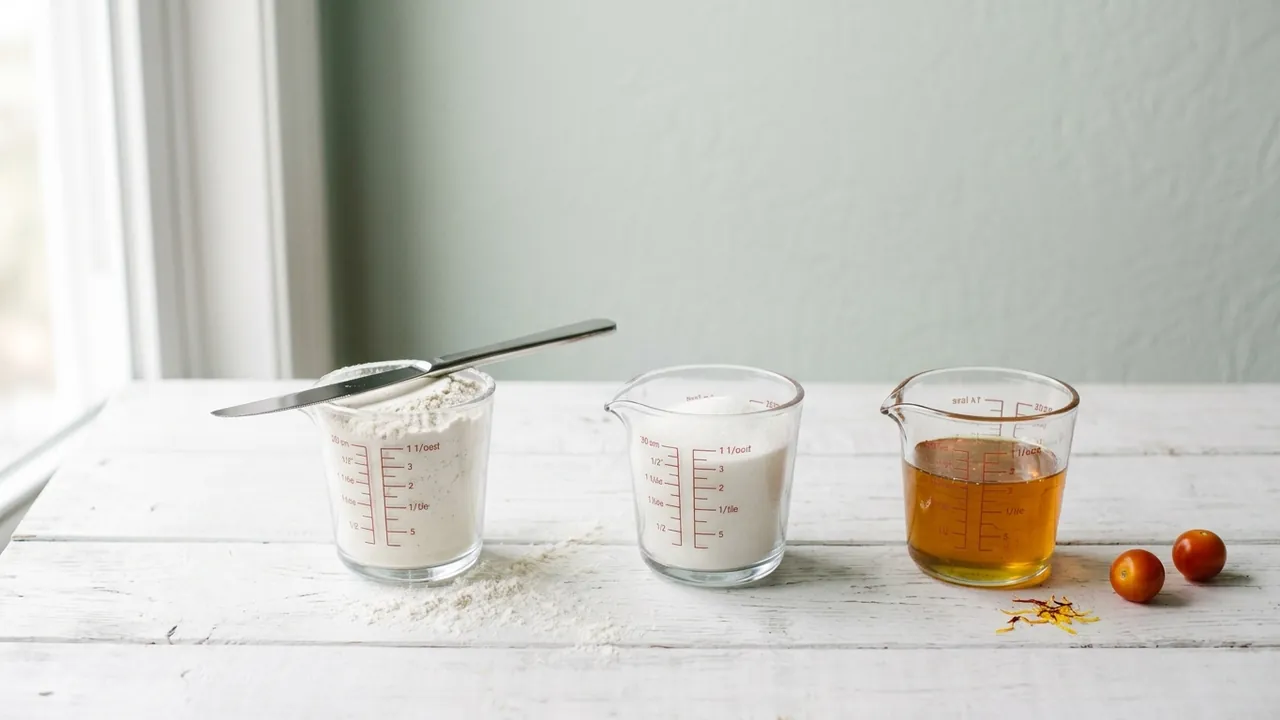
Cups measure space, not weight
A measuring cup tells you how much room an ingredient takes up. It says nothing about how much matter is inside that room. Flour is full of air, so a cup of it is light. Honey is dense and syrupy, so the same cup is almost three times as heavy. That is why a recipe that calls for one cup of flour and one cup of sugar is really asking for two very different weights.
| Ingredient | Typical weight of 1 US cup |
|---|---|
| Rolled oats | 90 g |
| Powdered sugar | 120 g |
| All-purpose flour | 125 g |
| Granulated sugar | 200 g |
| Butter | 227 g |
| Honey | 340 g |
These are typical values. Different references round them differently, and some give 120 g for flour. What matters is that you pick one number and stay consistent.
The biggest source of error: packing
Flour settles in the bag. If you push your cup into it and lift, you compress the flour and collect much more than the recipe author intended. Depending on how hard you press, a scooped cup can weigh 20% or more above a spooned one. In bread that usually means a stiff, dry dough. In cake it means a tight, crumbly crumb.
The same problem affects other ingredients. Brown sugar is meant to be packed, and recipes assume it is pressed firmly into the cup. Cocoa powder and powdered sugar clump, so a sifted cup weighs less than an unsifted one.
The spoon and level method
If you only have cups, use this method for dry ingredients:
- Fluff the flour in its container with a fork so it loosens.
- Spoon it lightly into the cup until it forms a mound. Do not tap or press.
- Sweep the top flat with the back of a knife.
This gives a repeatable result close to the typical weight in our cups to grams converter. For liquids, use a clear jug with markings and read it at eye level.
Not every cup is the same size
The US cup is 240 ml in nutrition labelling, though the older US customary cup is about 237 ml. Metric countries such as Australia, Canada and New Zealand use a 250 ml cup. The old imperial cup was 284 ml, and Japanese recipes use a 200 ml cup. A recipe written in one system and measured in another can be out by 4% or more, which is enough to matter in cakes.
Spoons differ too. A US tablespoon is 15 ml, while an Australian tablespoon is 20 ml. If a recipe comes from another country, check which system it uses before you start.
Why bakers prefer grams
Baking is chemistry. The ratio of flour to liquid decides whether a loaf rises, whether a cookie spreads, and whether a cake is moist. Weighing makes that ratio exact. It also makes recipes easy to scale: doubling 250 g is simple, while doubling two and a quarter cups is not. And you wash fewer dishes, because you can weigh everything into one bowl.
How to convert a recipe you already have
- List each ingredient with its cup or spoon amount.
- Look up the weight per cup for each ingredient.
- Multiply the number of cups by that weight, and round to the nearest 5 g for large amounts.
- Use ml for water and milk, since they weigh about 1 g per ml.
The recipe converter does all four steps when you paste an ingredient list, and you can print the result or save it as a PDF.
When cups are fine
Cups are fine for forgiving dishes. Soups, stews, smoothies and rice cooked with a measured amount of water do not need exact weights. The exception is rice cooked by the absorption method, where the ratio of rice to water decides the texture, so use the same cup for both.
Common mistakes
- Using a liquid measuring jug for dry ingredients, or a dry cup for liquids.
- Scooping flour directly from the bag.
- Swapping coarse kosher salt for fine table salt by volume. Coarse salt is much lighter per cup.
- Measuring butter in cups when the wrapper already shows gram or tablespoon markings.
- Mixing metric and US cups in the same recipe.
The short version
Treat cup weights as a good estimate, not a fact. Spoon and level dry ingredients, check the cup size of the recipe, and buy a scale if you bake often. Our kitchen scale buying guide explains what to look for.
Frequently asked questions
How many grams are in a cup of flour?
About 125 g for all-purpose flour when it is spooned and levelled. Some references give 120 g, and a scooped cup can weigh 150 g.
Is a US cup the same as a UK cup?
No. A US cup is about 240 ml, while the old imperial cup is 284 ml and the metric cup is 250 ml.
Do I need a kitchen scale?
For bread, cakes and pastry, yes. A scale removes the biggest source of error. For soups and stews, cups are fine.
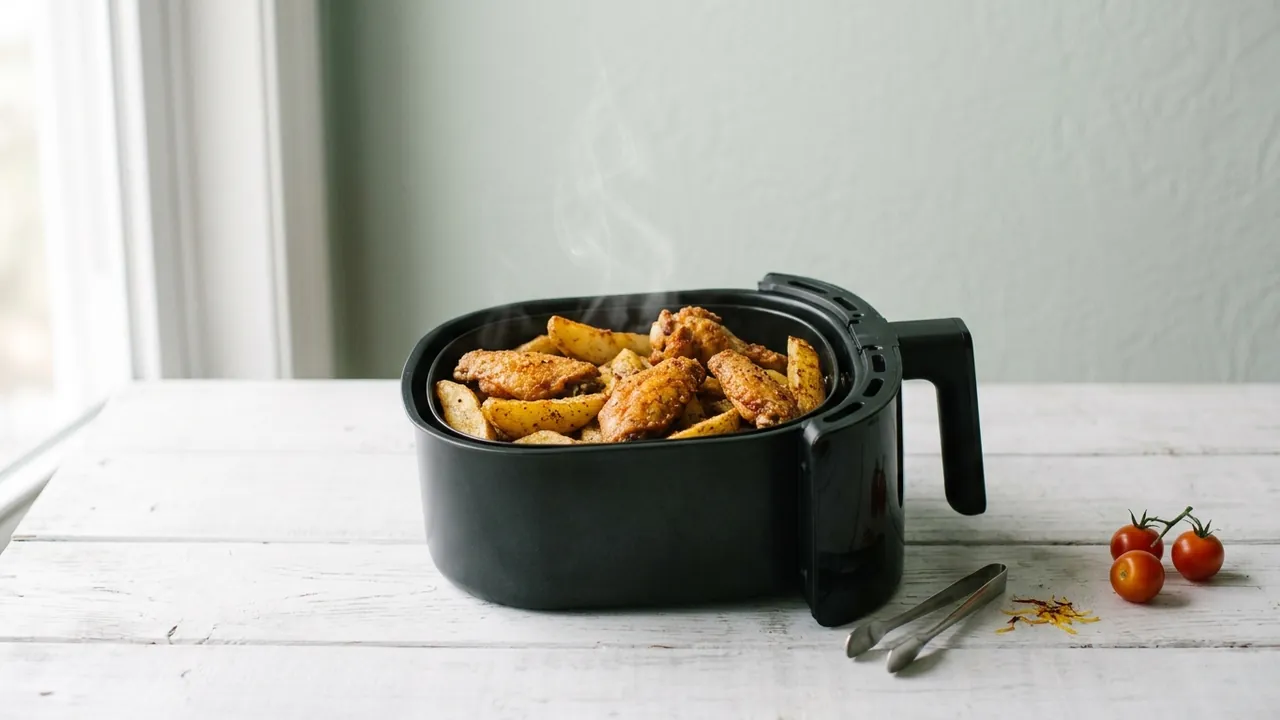 Oven to Air Fryer Conversion
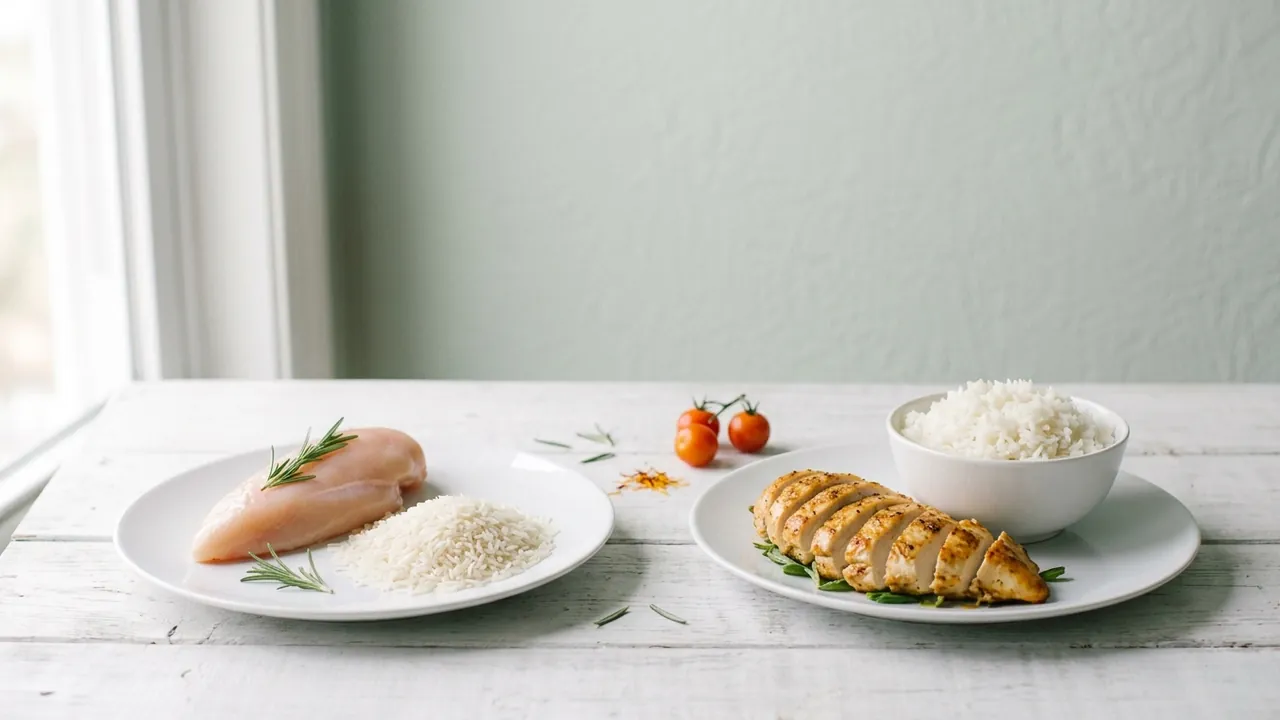 Raw vs Cooked Weight
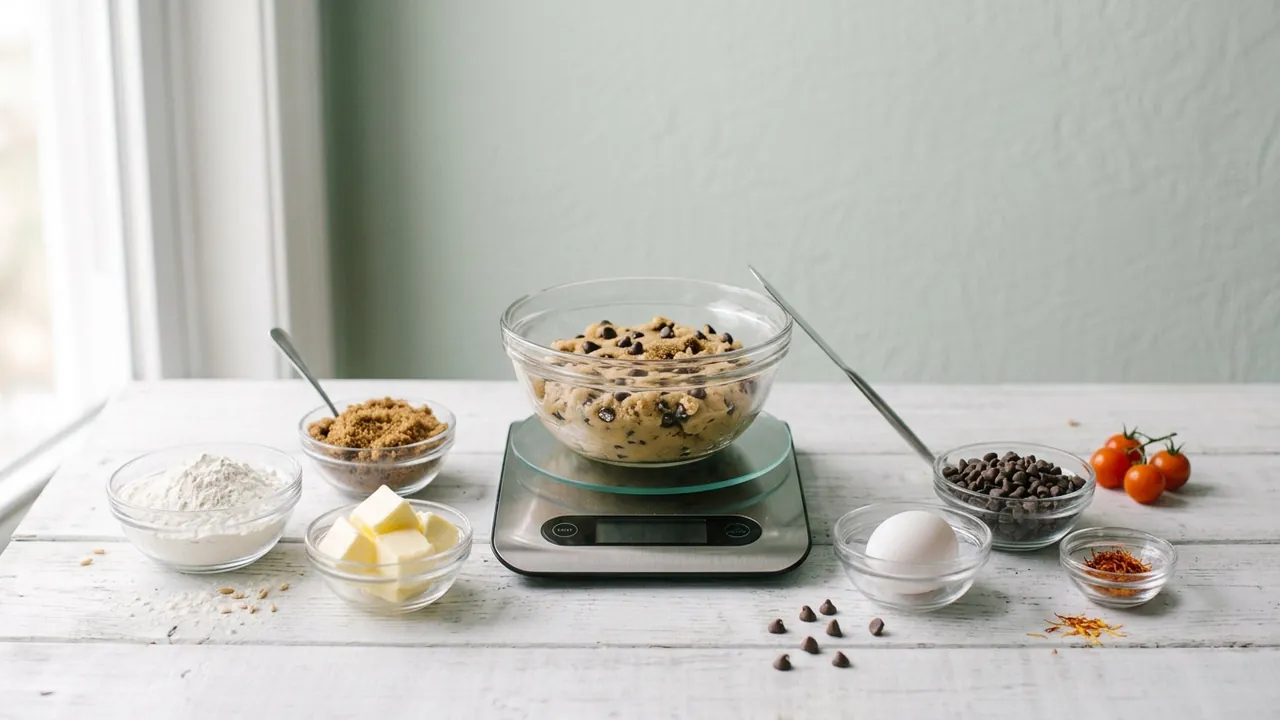 How to Convert a Recipe from Cups to Grams, Step by Step