Cups to grams, for your ingredient
A cup of flour and a cup of honey weigh very differently. Pick the ingredient and read it in grams, ounces or spoons.
How to use this tool
- Choose your ingredient from the list.
- Type the amount and pick a unit: cup, tablespoon, teaspoon, gram or ounce.
- Read the result in grams, ounces, cups, tablespoons and teaspoons.
- For baking, weigh the result on a kitchen scale instead of measuring with cups.
Cups to grams, for your ingredient
A cup of flour and a cup of honey weigh very differently. Pick the ingredient, enter the amount, and read it in any unit.
Weights are typical averages (US cup, 240 ml). Packing and brand change them by a few percent, so for baking a kitchen scale is more exact.
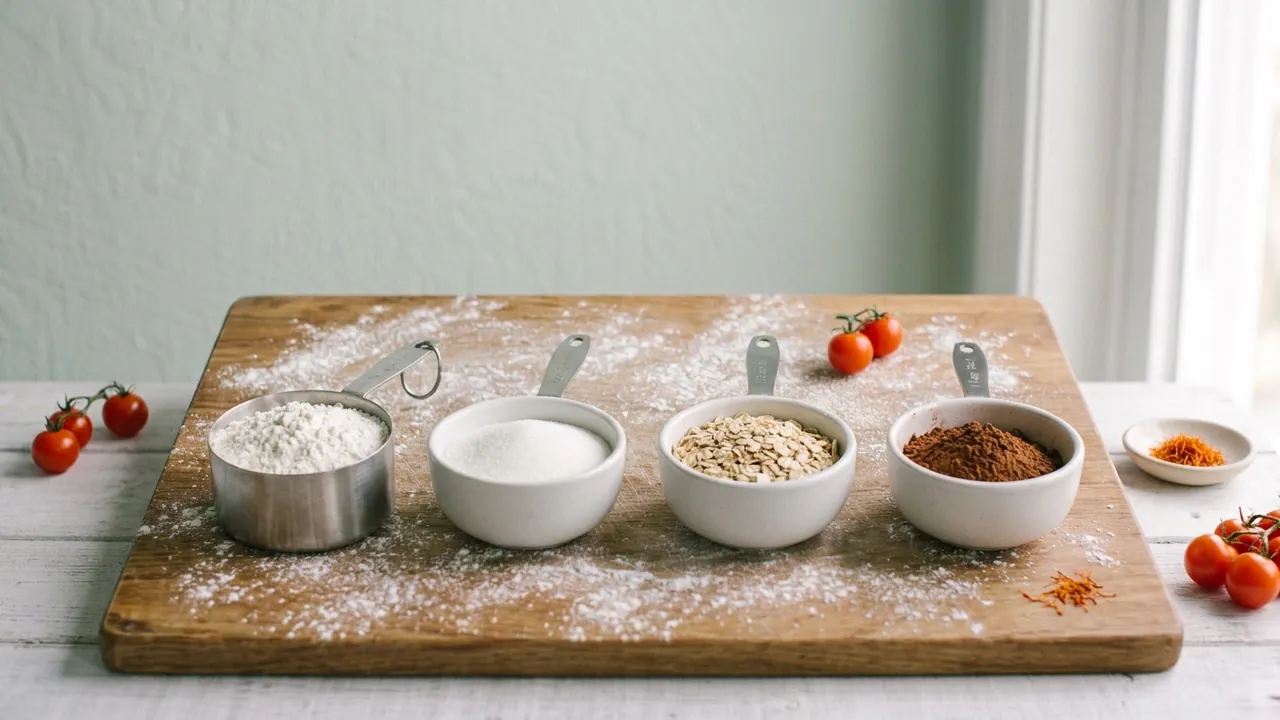
How this converter works
Each ingredient has a typical weight for one US cup (240 ml). The tool converts your amount to cups, then multiplies by that weight to get grams, ounces, tablespoons and teaspoons. Because packing, humidity and brand change real weights by a few percent, treat the result as a good estimate, and weigh on a scale for baking.
Cup to gram chart for 20 ingredients
These are the same values the converter uses. One cup here means a US cup. Spoon flour into the cup and level it, and pack brown sugar firmly.
| Ingredient | 1 cup | 1/2 cup | 1/4 cup | 1 tbsp |
|---|---|---|---|---|
| All-purpose flour | 125 g | 62.5 g | 31.3 g | 7.8 g |
| Bread flour | 127 g | 63.5 g | 31.8 g | 7.9 g |
| Whole wheat flour | 120 g | 60 g | 30 g | 7.5 g |
| Granulated sugar | 200 g | 100 g | 50 g | 12.5 g |
| Brown sugar (packed) | 213 g | 106.5 g | 53.3 g | 13.3 g |
| Powdered sugar | 120 g | 60 g | 30 g | 7.5 g |
| Butter | 227 g | 113.5 g | 56.8 g | 14.2 g |
| Milk | 245 g | 122.5 g | 61.3 g | 15.3 g |
| Water | 237 g | 118.5 g | 59.3 g | 14.8 g |
| Honey | 340 g | 170 g | 85 g | 21.3 g |
| Olive oil | 216 g | 108 g | 54 g | 13.5 g |
| Vegetable oil | 218 g | 109 g | 54.5 g | 13.6 g |
| Rolled oats | 90 g | 45 g | 22.5 g | 5.6 g |
| White rice (uncooked) | 185 g | 92.5 g | 46.3 g | 11.6 g |
| Cocoa powder | 85 g | 42.5 g | 21.3 g | 5.3 g |
| Table salt | 288 g | 144 g | 72 g | 18 g |
| Peanut butter | 258 g | 129 g | 64.5 g | 16.1 g |
| Yogurt | 245 g | 122.5 g | 61.3 g | 15.3 g |
| Cornstarch | 128 g | 64 g | 32 g | 8 g |
| Chocolate chips | 170 g | 85 g | 42.5 g | 10.6 g |
Why a cup of each ingredient weighs a different amount
A cup measures volume, not weight. Light, airy ingredients like cocoa powder and rolled oats fill a cup with less mass, so a cup weighs under 100 g. Dense liquids like honey weigh far more than water, about 340 g per cup. Flour is the trickiest, because scooping straight from the bag packs it down and can add 20 to 30 g per cup. That is why bakers in the US, UK, Canada and Australia increasingly weigh ingredients instead.
US cups vs metric cups
A US cup holds about 240 ml. The metric cup used in Australia, Canada, New Zealand and many UK recipes holds 250 ml, so it weighs about 4% more. For most cooking the difference does not matter, but for bread and cakes use the cup the recipe was written for. An Australian tablespoon is also bigger: 20 ml instead of 15 ml.
Tips for accurate conversions
- For flour, stir it, spoon it into the cup and level with a knife. Do not tap the cup.
- For sticky ingredients like honey and peanut butter, grease the cup lightly so it all slides out.
- Butter in the US is sold in sticks: 1 stick is 1/2 cup, which is 113 g.
- When a recipe gives both cups and grams, trust the grams.
Related guides
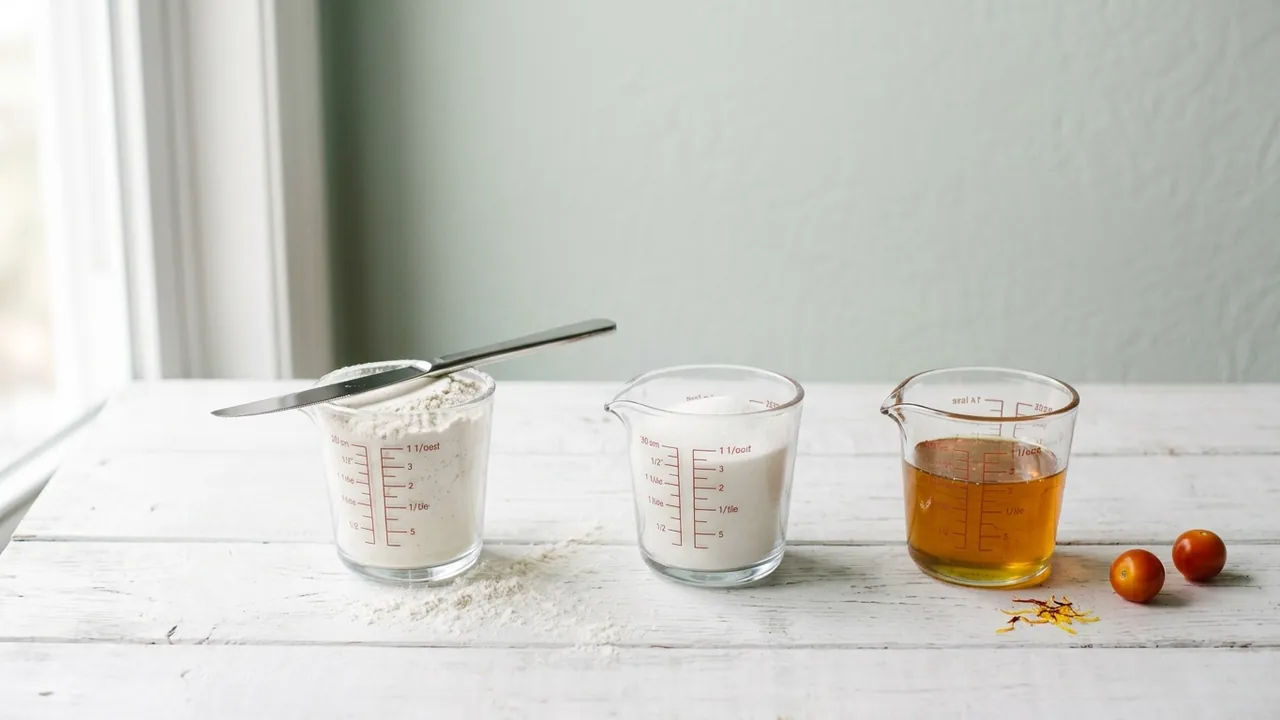 Why a Cup of Flour Weighs Different Amounts
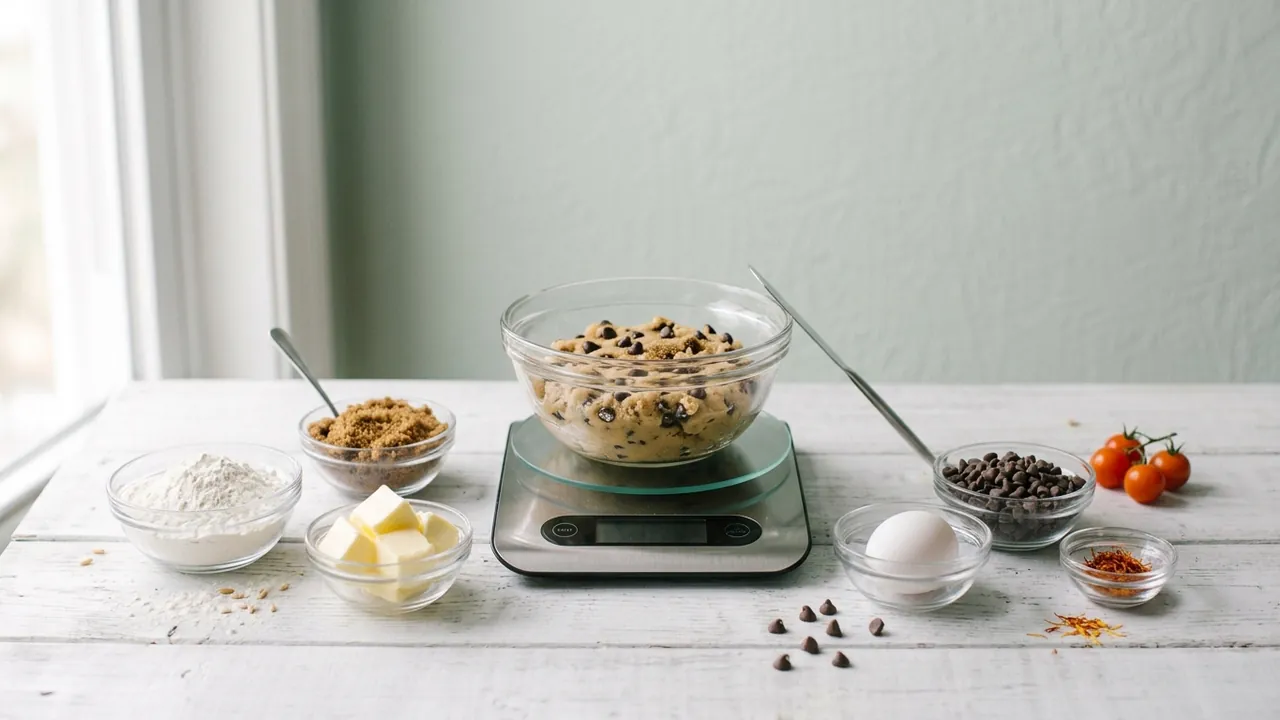 How to Convert a Recipe from Cups to Grams, Step by Step
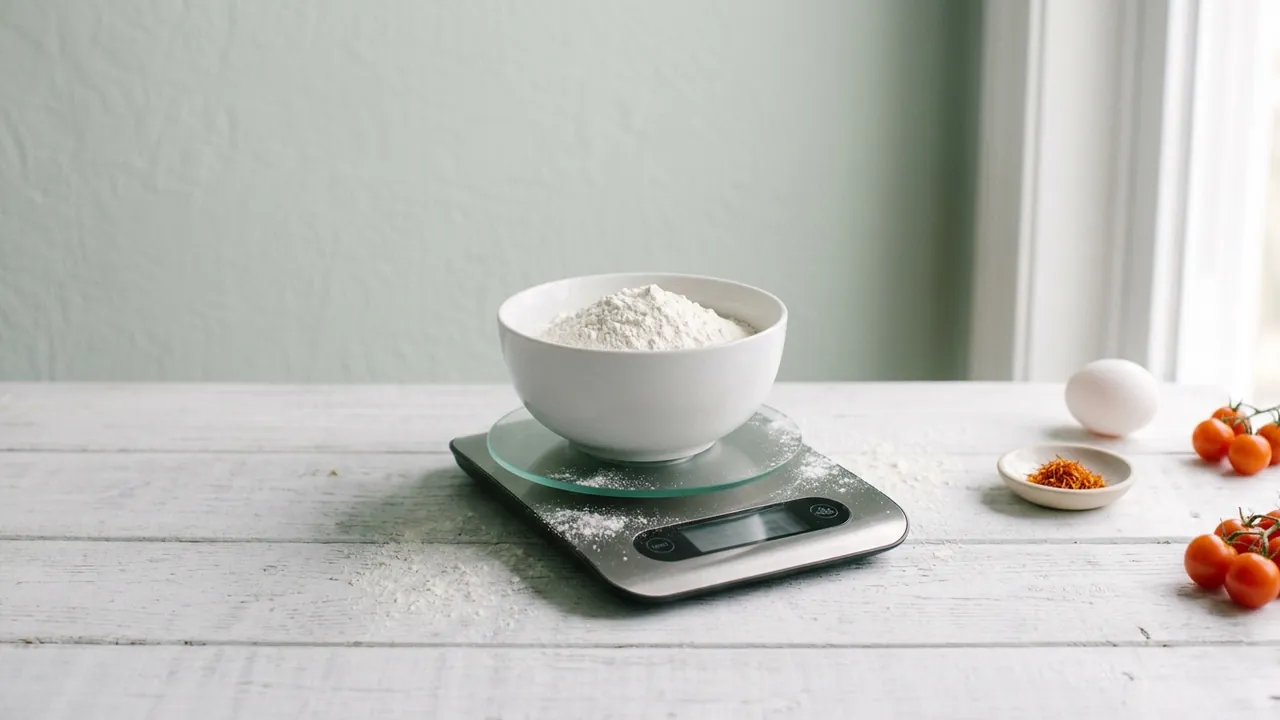 Kitchen Scale Buying Guide
Frequently asked questions
Why does a cup of flour weigh less than a cup of sugar?
Flour is lighter and fluffier, so a cup holds less mass. Weight depends on the ingredient's density.
Which cup size do you use?
A US cup of 240 ml. Some countries use 250 ml cups, which gives about 4% more.
Is weighing better than using cups?
Yes. A scale removes the packing differences that make cup measures vary by 10 to 20%.
How many grams is 1 cup of water?
One US cup of water weighs about 237 g, because 1 ml of water weighs 1 g. A 250 ml metric cup of water weighs 250 g.
How many grams is 1 cup of oil?
A US cup of olive oil weighs about 216 g and a cup of vegetable oil about 218 g. Oil is lighter than water, so a cup weighs less than 237 g.
How many grams is 1 cup of salt?
A cup of fine table salt weighs about 288 g. Kosher and flaky salts are much lighter by volume and differ by brand, so weigh them or follow the brand on the recipe.
Is a UK cup the same as a US cup?
Not quite. Most UK, Australian and Canadian recipes use a 250 ml metric cup, while a US cup is about 240 ml.