Raw vs Cooked Weight: Why Food Changes in the Pan and Which to Weigh
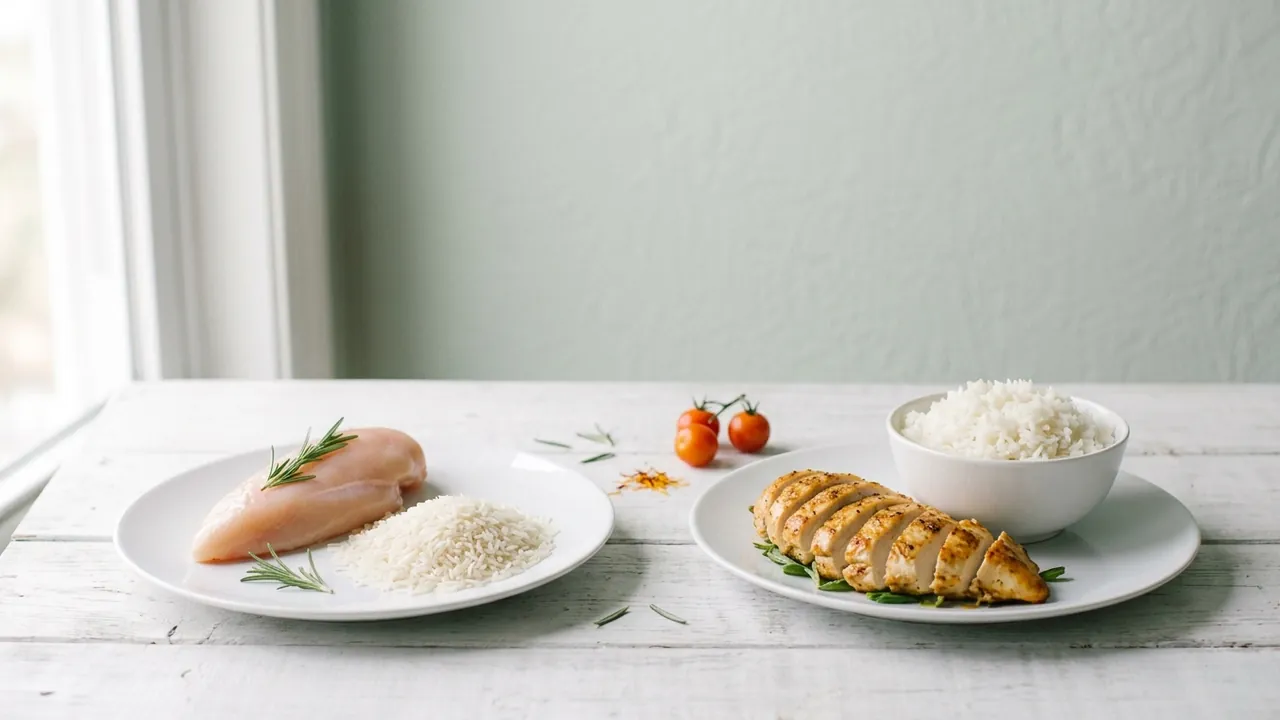
What happens to food weight when you cook
Most food is mostly water. Cooking moves that water around. Meat heats up, its proteins tighten and squeeze out moisture, and some of that moisture and fat is lost to the pan or evaporates. The food gets smaller and lighter. Rice, pasta and dried beans do the opposite. They soak up cooking water and swell, so a small scoop of dry grains becomes a large bowl of cooked food.
Nothing magical happens to the nutrients. The calories in 200 g of raw chicken are still in the cooked chicken. There is simply less water, so the same food weighs less and each gram of cooked meat holds more calories than each gram of raw.
Typical changes
| Food | Cooked weight compared with raw |
|---|---|
| Chicken breast | about 75% |
| Ground beef | about 72% |
| Steak (medium) | about 75% |
| Pork chop | about 72% |
| Salmon fillet | about 80% |
| Baked potato | about 80% |
| Mushrooms | about 50% |
| Dry pasta | about 220% |
| Dry lentils | about 240% |
| Dry oats | about 250% |
| White rice | about 300% |
These are typical averages. They change with the cut, the amount of fat, the cooking method and how done the food is. A well-done steak loses more than a rare one. Chicken thighs with skin behave differently from skinless breast. The raw to cooked converter uses these averages and lets you convert in both directions.
A worked example
Say a meal plan calls for 150 g of cooked chicken breast. With a yield of about 75%, you need roughly 200 g raw (150 divided by 0.75). If you cook 400 g raw, expect about 300 g cooked, which is two 150 g portions.
For rice, if you want 300 g of cooked rice, you need roughly 100 g dry (300 divided by 3). The exact figure depends on how much water you use and how long you cook it.
Which weight should you use?
Both are valid, but you must be consistent.
Raw weight is more reliable. It does not depend on how long you cooked the food or how much water it held. Nutrition databases usually list raw values for meat, so raw weighing matches them directly.
Cooked weight is more convenient when you have already cooked a large batch and want to portion it. If you use cooked weight, use a nutrition entry labelled "cooked" for the same food and method.
The most common mistake is mixing them: weighing cooked food and then using the raw nutrition values, which makes the portion look larger in calories than it really is for meat, and smaller for rice and pasta.
Reading nutrition labels
Packaged foods list nutrition per 100 g of the product as sold. For dry pasta or rice, that is the dry weight. For pre-cooked or ready meals, it is the cooked weight. Check the wording on the pack, which usually says "as sold" or "as prepared".
Tips for meal prep
- Weigh a whole batch raw, cook it, then weigh the cooked total. Divide the cooked total by the number of portions.
- Do the same weighing each time you use a new method, such as grilling instead of oven roasting, because the yield changes.
- Keep a note of your own yield for foods you cook often. Your own number beats an average.
- Use a scale with a tare function so you can weigh into the dish you will cook in.
Why your numbers might not match ours
Our figures are typical values. If you marinate meat, add stock to rice or cook pasta for longer, the weight will change. Treat any converter as a good estimate and trust your own scale for precision.
The short version
Choose one method, raw or cooked, and stay with it. Use a yield factor to convert between them, and double-check when a recipe or nutrition label mentions "raw", "dry" or "cooked".
Frequently asked questions
How much weight does chicken lose when cooked?
Usually around 25%, so 200 g raw becomes roughly 150 g cooked.
Why does rice weigh more after cooking?
It absorbs water. Cooked white rice weighs about three times its dry weight.
Is it better to weigh food raw or cooked?
Raw is more consistent. If you weigh cooked food, use nutrition data for cooked food.
 Why a Cup of Flour Weighs Different Amounts
 Oven to Air Fryer Conversion
 How to Convert a Recipe from Cups to Grams, Step by Step